Price guide
How much is a diamond?
There is no answer to this question, and every site that gives you one is guessing. What there is instead is a short list of things that move the number, in order of how much they move it — and a five-minute method for getting today's real figure for the stone you actually want.
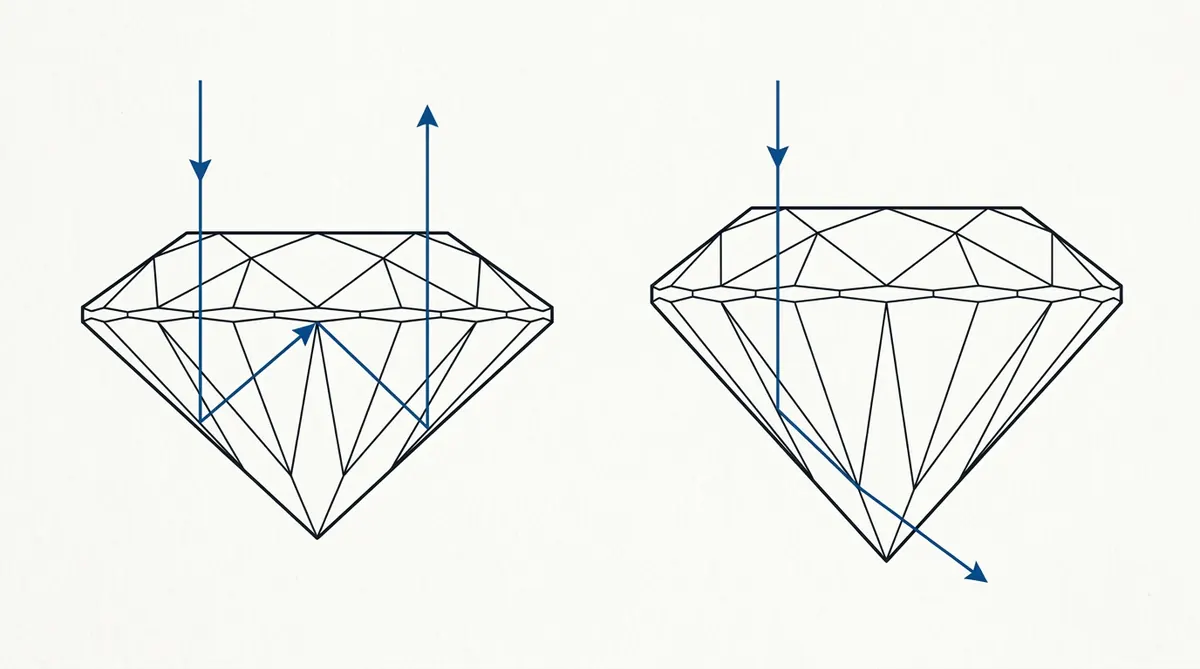
Check live prices — we don't print them here, because they change daily.
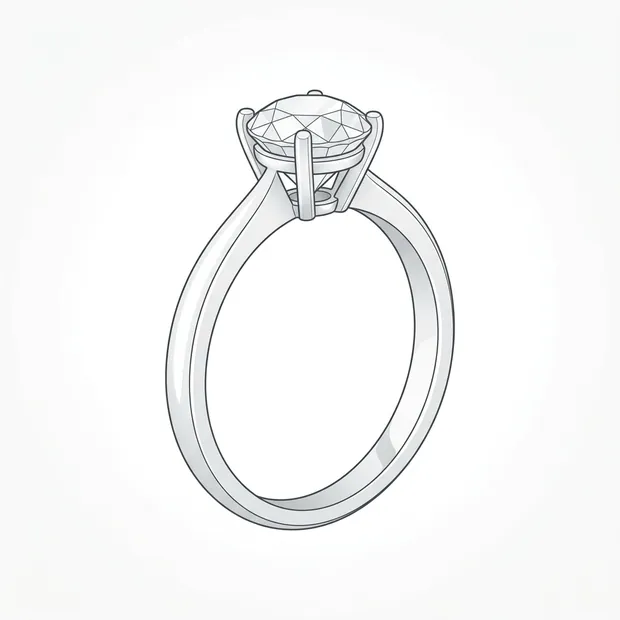
Rings
The centre stone is where nearly all the money goes. Compare the same specification at each — shape, carat, colour, clarity, cut grade and grading laboratory held identical, or you are not comparing anything.
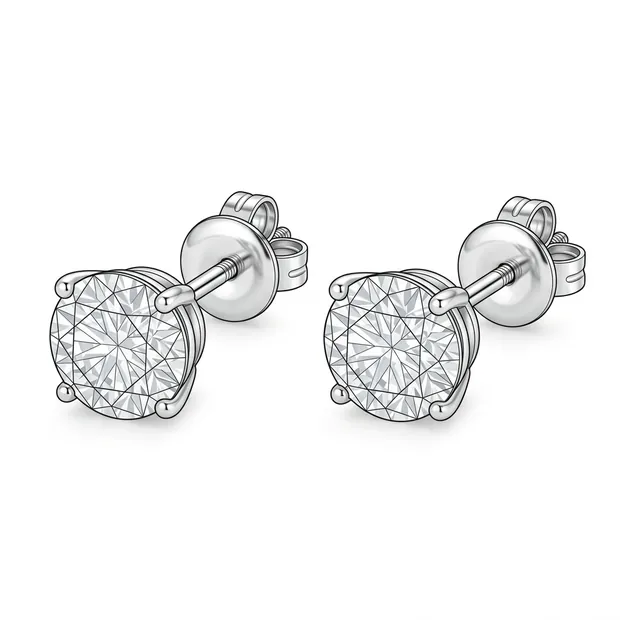
Earrings
Sold by total carat weight across the pair, so a 1ct pair is two half-carat stones. Cheap enough to make a sensible first purchase from a retailer you have not used before.
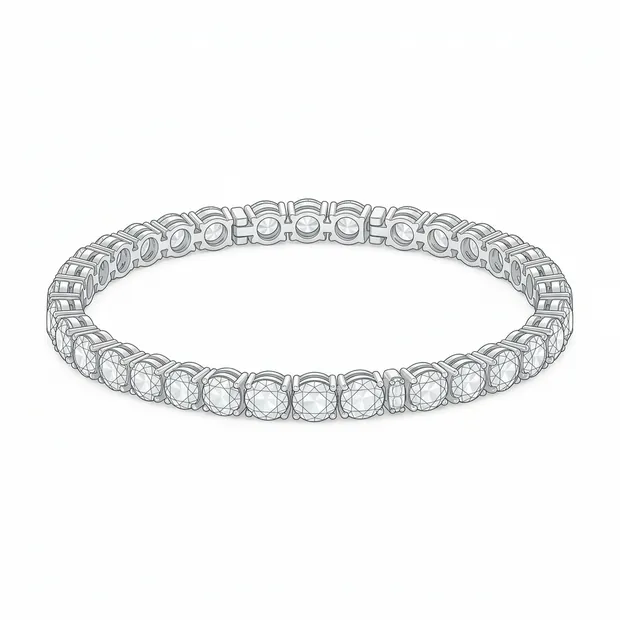
Bracelets
Check the clasp and the safety catch before the stone quality. A tennis bracelet that springs open on the wrist is the most common way people lose one.
Necklaces
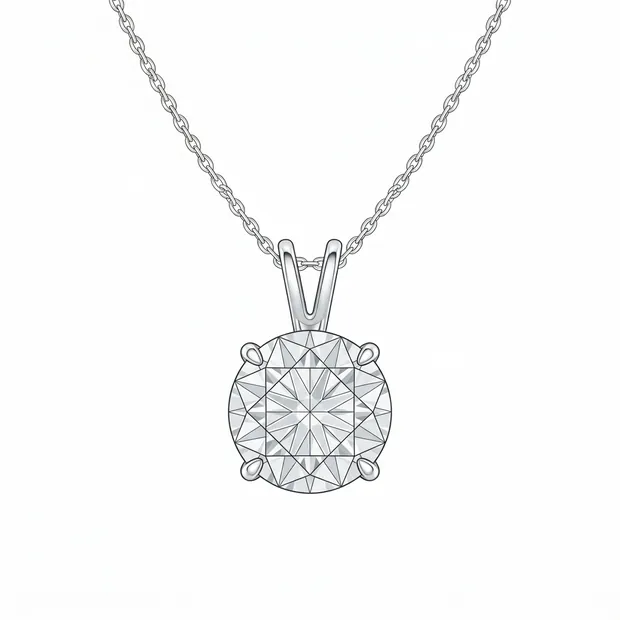
The chain matters more than buyers expect. Check the gauge and the clasp — a heavy pendant on a thin chain is a repair waiting to happen.
Links open each retailer's own category page. Rare Carat links are affiliate links and earn us a commission if you buy, at no extra cost to you. The others are plain links that earn us nothing today. If that changes, this line changes with it. Every relationship is listed on the disclosure page.
The six things that set the price
In order of how much they move the number.
1. Natural or lab-grown. The largest single factor by a wide margin, and the gap widens as the stone gets bigger. Everything below applies within each category, not across them.
2. Carat weight. Not linearly — price per carat rises with weight, so doubling the weight more than doubles the price. And weight is not size: see the carat size chart.
3. Cut grade. The only grade that changes what a person sees from across a room, and the one most often quietly compromised to hit a price point.
4. Clarity. Steep at the top of the scale. Also the grade where an informed buyer saves most, because the grade counts inclusions without saying where they sit.
5. Colour. Compresses dramatically once a stone is set, and disappears almost entirely in yellow or rose gold.
6. Grading laboratory. Grades are comparable within a laboratory, not across them. A stone that looks cheap for its specification is sometimes just graded generously somewhere.
Our 4Cs guide covers what each of these actually does.
Prices by weight
Each of these pages covers what changes at that size and where the savings sit.
- 1 carat — the most-shopped weight, and where the carat break saves most reliably
- 2 carats — where inclusions start becoming visible
- 3 carats — the most-searched price, and where lab-grown becomes the dominant decision
- 5 carats — a different market, where stones stop being interchangeable
- Lab-grown at any weight — why the price keeps falling and what that costs you later
The five-minute method
This works at any size and gives you a current answer instead of somebody's average.
- Fix a complete specification. Shape, carat weight, colour grade, clarity grade, cut grade, and grading laboratory. Leaving any one of these open makes the comparison meaningless.
- Open two retailers from the buttons on this page and set identical filters at both.
- Sort by price and take the cheapest exact match at each.
- Check for a promotion running at one and not the other. A sale at one retailer turns the comparison into noise.
- Check fluorescence. It is not one of the 4Cs but it moves the price. A stone that looks impossibly cheap for its grades often has strong fluorescence.
That is the whole method. It takes longer to read than to do.
The three savings worth knowing
Buy just under a round weight. Prices step sharply at whole carats while the width barely changes — 0.90 ct measures about 6.2 mm against 6.5 mm at a full carat. That is 0.3 mm across the only dimension anyone sees, for a price difference far larger than 4 percent.
Drop a clarity grade, if you can see the stone. Placement decides visibility, not the grade. This is the largest saving available to a buyer who does the work, and it only works where the retailer's imaging lets you look.
Take colour in the near-colourless range, especially in yellow or rose gold, where the setting warms the stone regardless.
What not to optimise
Cut. Protect it at every budget. It is unglamorous advice, which is exactly why product descriptions rarely give it.
If you already own the stone
Everything above is about buying. If you are trying to find out what a diamond you already have is worth, that is a different market with a different answer — usually a much lower one. Our guide to selling explains why the gap is so wide and how to avoid accepting the first offer.
Common questions
How much does a diamond cost?
It depends on six things, not one: carat weight, cut grade, colour, clarity, grading laboratory, and whether the stone is natural or lab-grown. Those six produce a range wide enough that any single figure is misleading. This page lists them in order of impact and shows how to price a specific stone in five minutes.
Why does nobody give a straight answer?
Because a straight answer would be wrong. Prices move constantly and depend on the full specification. Sites that publish a number are either averaging across things that should not be averaged, or quoting a figure that was accurate once. We would rather show you the method.
What is the cheapest way to buy a diamond?
Choose lab-grown, buy just under a round carat weight, take colour in the near-colourless range, and pick clarity by looking at the stone rather than by the grade — but protect the cut grade, because it is the only one that changes how the diamond looks.
How much should I spend on a diamond?
The salary-multiple rules were written by advertising agencies and have no basis outside the industry that benefits from them. Our budget guide sets out a way to arrive at a number based on your finances instead.