Guide
Carat weight against actual size
Carat is a weight, not a size. Doubling the weight adds only about a quarter to the width — which is why a two-carat stone does not look twice as big, and why buying just under a round number costs less without looking any different.
Check live prices — we don't print them here, because they change daily.
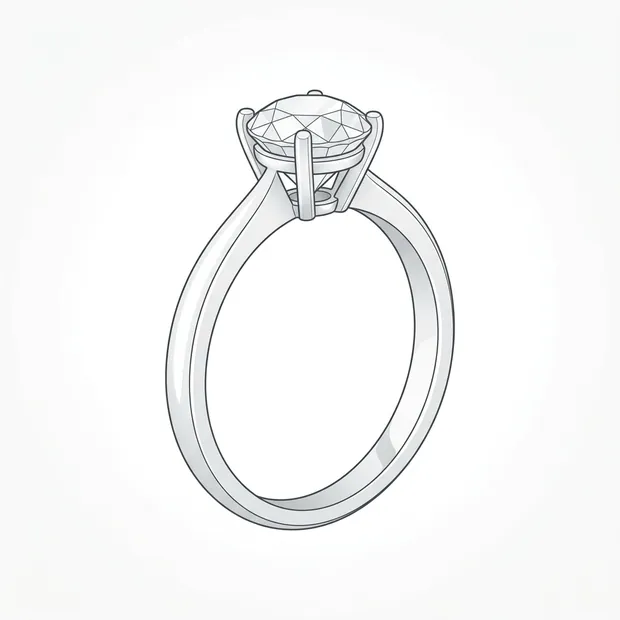
Rings
The centre stone is where nearly all the money goes. Compare the same specification at each — shape, carat, colour, clarity, cut grade and grading laboratory held identical, or you are not comparing anything.
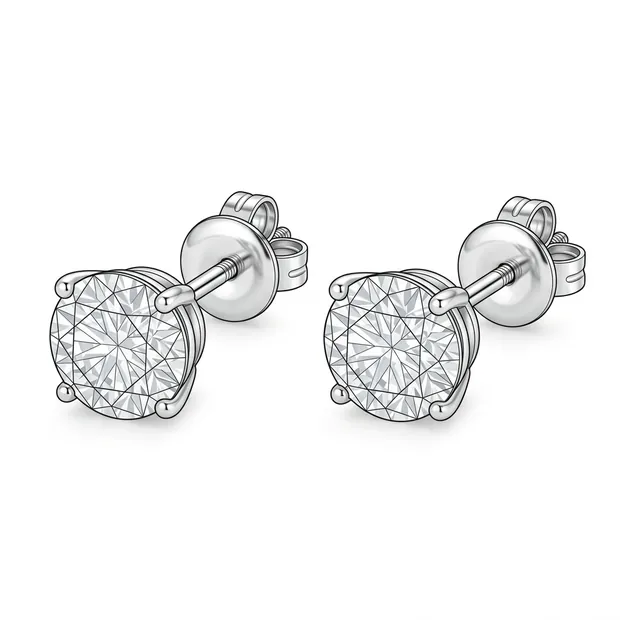
Earrings
Sold by total carat weight across the pair, so a 1ct pair is two half-carat stones. Cheap enough to make a sensible first purchase from a retailer you have not used before.
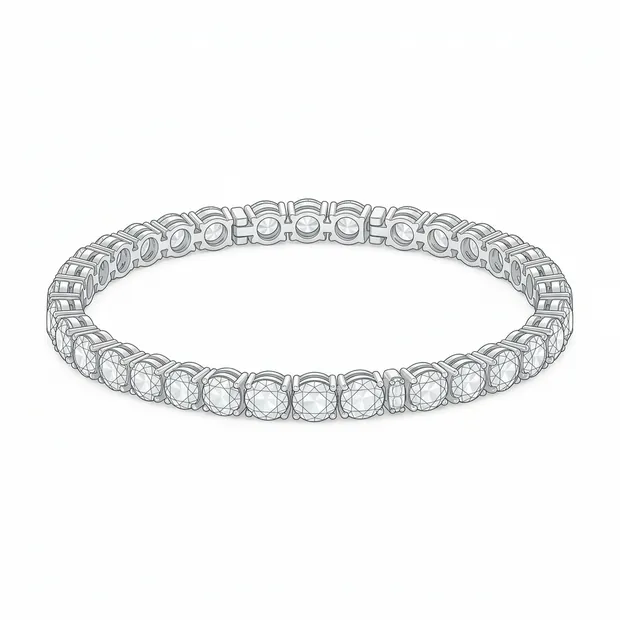
Bracelets
Check the clasp and the safety catch before the stone quality. A tennis bracelet that springs open on the wrist is the most common way people lose one.
Necklaces
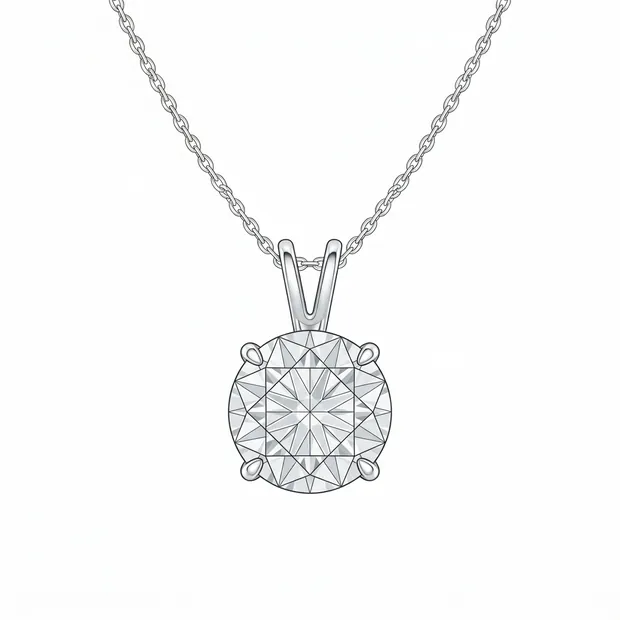
The chain matters more than buyers expect. Check the gauge and the clasp — a heavy pendant on a thin chain is a repair waiting to happen.
Links open each retailer's own category page. Rare Carat links are affiliate links and earn us a commission if you buy, at no extra cost to you. The others are plain links that earn us nothing today. If that changes, this line changes with it. Every relationship is listed on the disclosure page.
The arithmetic that surprises everyone
Carat measures mass. What you see is width across the top.
Mass scales roughly with volume, and volume grows with the cube of the width. So to double the weight you multiply the width by the cube root of two — about 1.26.
Doubling carat weight adds roughly a quarter to the diameter. Not double, not half — about 26 percent.
Approximate diameters for well-cut round brilliants
| Carat weight | Approx. diameter | Change from previous |
|---|---|---|
| 0.50 ct | ≈ 5.1 mm | — |
| 0.75 ct | ≈ 5.8 mm | +14% |
| 0.90 ct | ≈ 6.2 mm | +7% |
| 1.00 ct | ≈ 6.5 mm | +4% |
| 1.50 ct | ≈ 7.4 mm | +14% |
| 2.00 ct | ≈ 8.1 mm | +10% |
| 3.00 ct | ≈ 9.3 mm | +15% |
| 4.00 ct | ≈ 10.2 mm | +10% |
| 5.00 ct | ≈ 11.0 mm | +8% |
These are approximations for well-proportioned round brilliants and they do not go out of date the way prices do — the relationship between weight and width is physical, not commercial. Individual stones vary with proportions, and the grading report gives the exact measurements for the stone in front of you. Always check those rather than assuming the table.
The line worth reading twice
0.90 ct measures about 6.2 mm. 1.00 ct measures about 6.5 mm.
That is a difference of roughly 0.3 mm — about the thickness of three sheets of paper — across the only dimension anyone sees.
The price difference between those two stones is not 4 percent. Prices step sharply at round weights because the market pays for the number on the certificate. This is the single most reliable saving available to a diamond buyer, and it costs you nothing visible.
Our one-carat price guide covers how to find that step.
Why two stones of the same weight look different
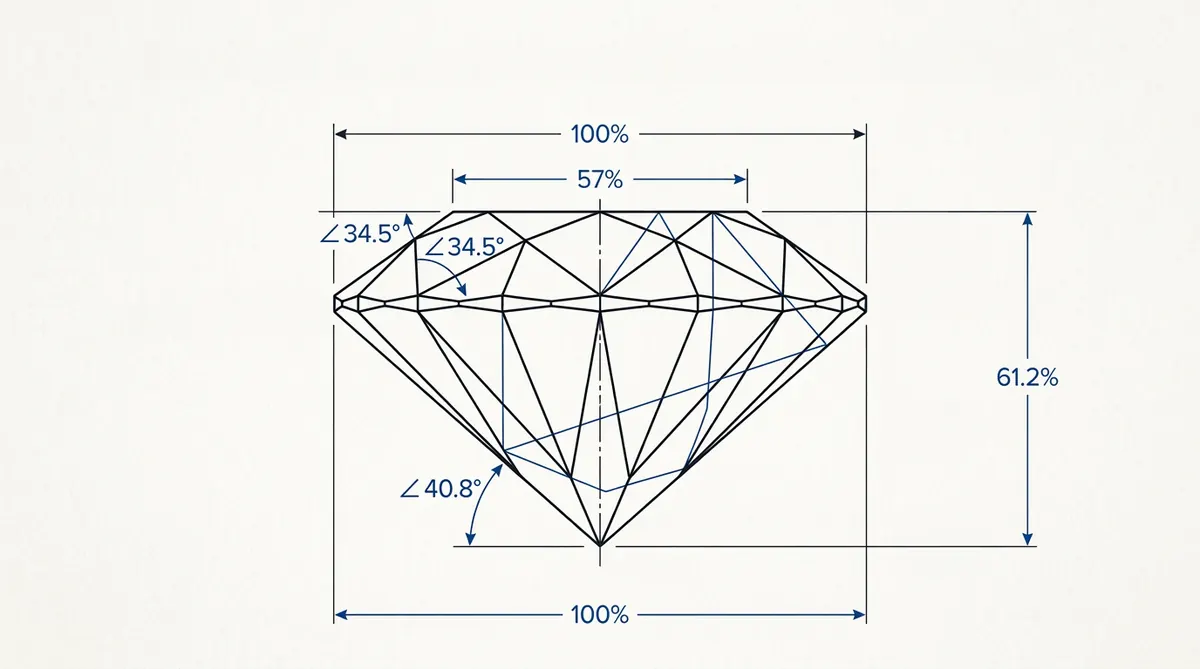
Weight can be hidden. A stone cut too deep carries mass below the girdle, where it contributes nothing to how large the diamond appears from above.
So a poorly proportioned one-carat stone can face up like a 0.85, while a superbly cut one looks its full size and returns more light besides. As our 4Cs guide explains, this is one more reason cut is the grade to protect.
Practical rule: compare millimetres, not carats. The grading report gives both.
Shape changes the answer
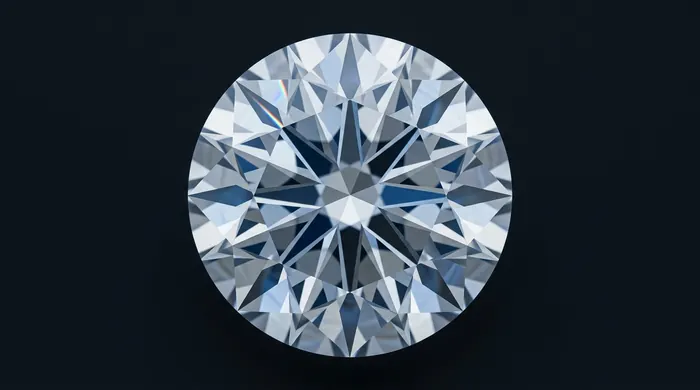
Round brilliants concentrate weight in depth. Elongated shapes spread it across a longer outline, so they generally cover more finger for the same weight.
 Round
Round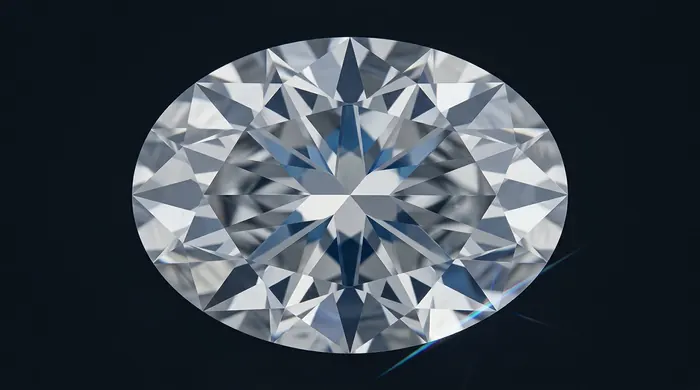 Oval
Oval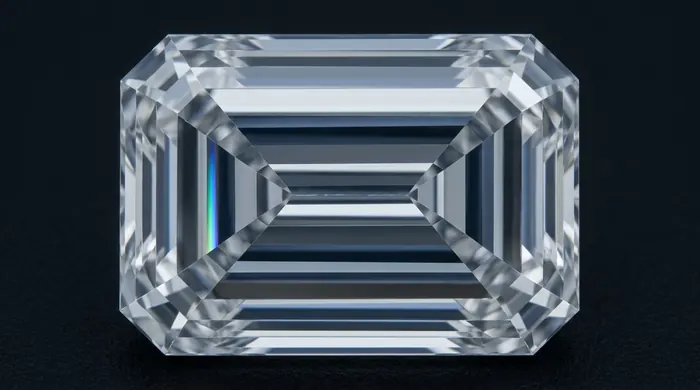 Emerald
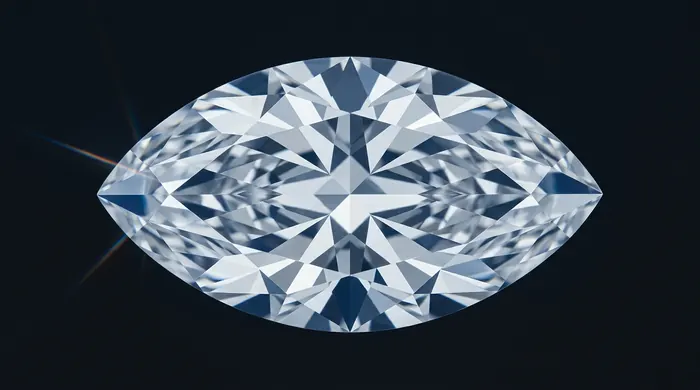 Marquise
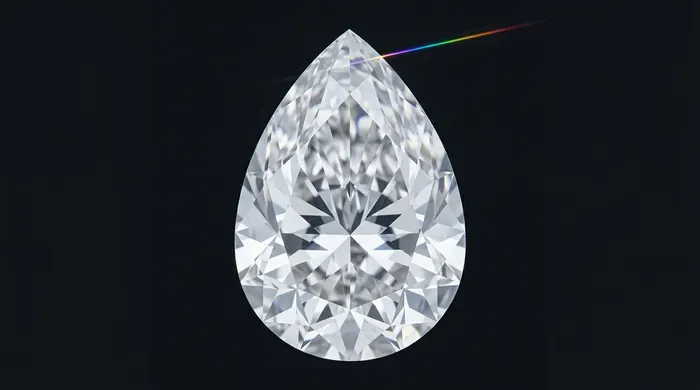 Pear
Pear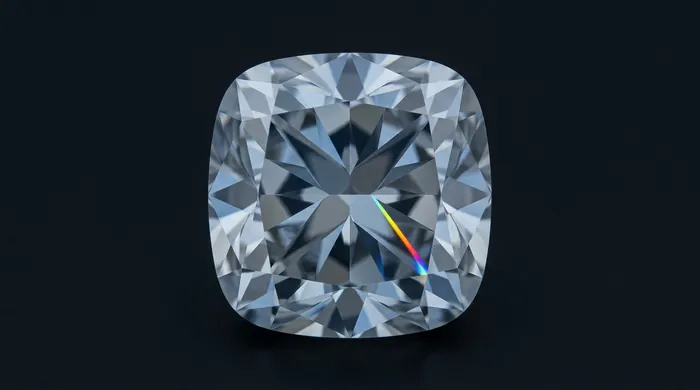 Cushion
What a chart cannot tell you
Finger size changes the impression completely. The same stone reads large on a size 4 and modest on a size 8. Charts are drawn in the abstract; hands are not.
Setting height and band width shift it too. A slim band makes a stone look larger; a wide one competes with it. A high setting lifts the stone into the light and reads bigger than a low bezel of the same weight.
If size on the hand is what you are optimising for, look for an elongated shape, a slim band, and a stone just under a round weight. That combination buys the most visible diamond per dollar of anything in this guide.
Common questions
How big is a 1 carat diamond in mm?
A well-proportioned round brilliant of one carat measures roughly 6.4 to 6.5 mm across. Poorly proportioned stones of the same weight can measure less, because the extra weight is carried in depth below the girdle where it does not show.
Does a 2 carat diamond look twice as big as a 1 carat?
No. Weight scales roughly with volume, so it grows with the cube of the width. Doubling the weight adds only about 26 percent to the diameter — a two-carat round measures around 8.1 mm against 6.5 mm. It is visibly larger, but nowhere near double.
Why do two diamonds of the same carat weight look different sizes?
Because proportions differ. A stone cut too deep carries weight below the girdle, invisible from above, and faces up smaller than a well-cut stone of identical weight. This is why the millimetre measurement on the grading report matters as much as the carat figure.
Which shapes look biggest for their weight?
Elongated shapes — oval, marquise, pear, emerald — generally cover more finger for the same carat weight than a round brilliant, because their weight is spread across a longer outline rather than concentrated in depth.