Policy
Insuring a ring: what actually covers what
A lifetime warranty does not cover loss. A homeowners policy usually caps jewellery far below what a ring is worth. Between those two facts sits most of the confusion in this subject — and a great deal of money that people assume is protected and is not.
Check live prices — we don't print them here, because they change daily.
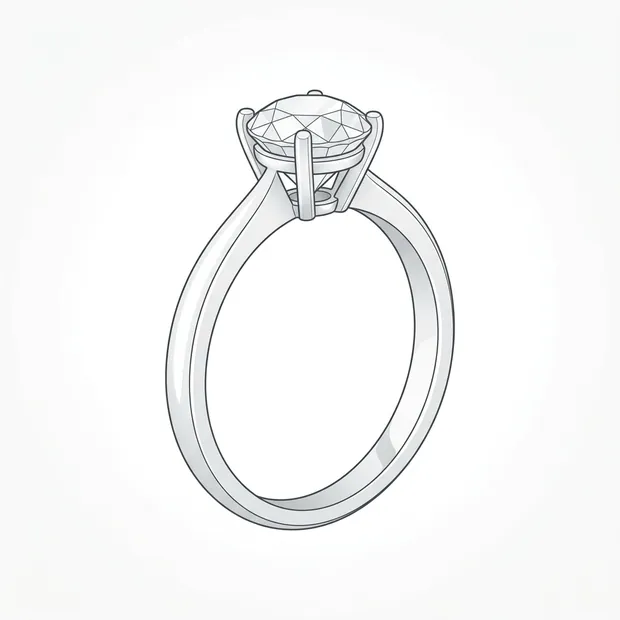
Rings
The centre stone is where nearly all the money goes. Compare the same specification at each — shape, carat, colour, clarity, cut grade and grading laboratory held identical, or you are not comparing anything.
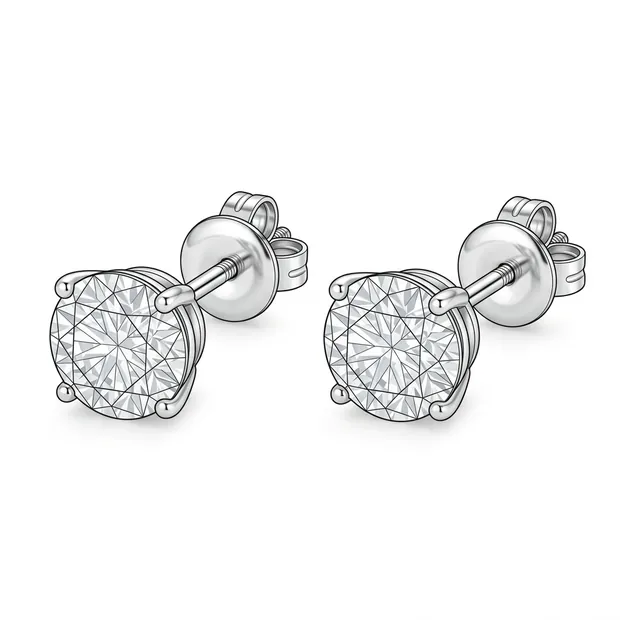
Earrings
Sold by total carat weight across the pair, so a 1ct pair is two half-carat stones. Cheap enough to make a sensible first purchase from a retailer you have not used before.
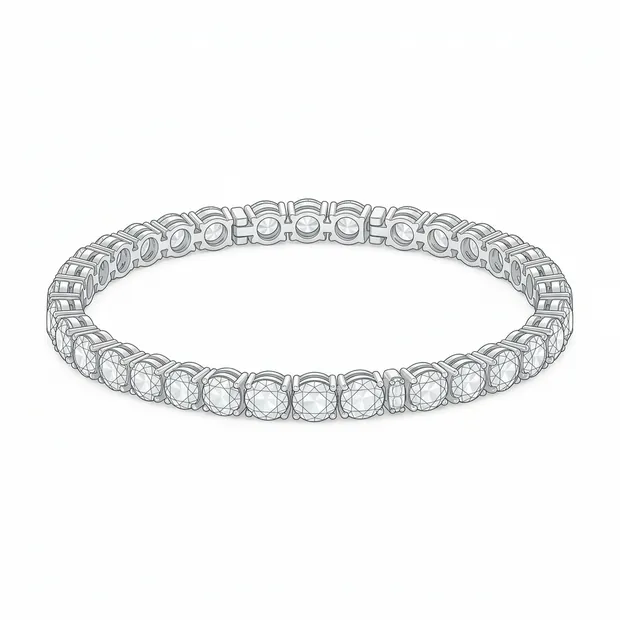
Bracelets
Check the clasp and the safety catch before the stone quality. A tennis bracelet that springs open on the wrist is the most common way people lose one.
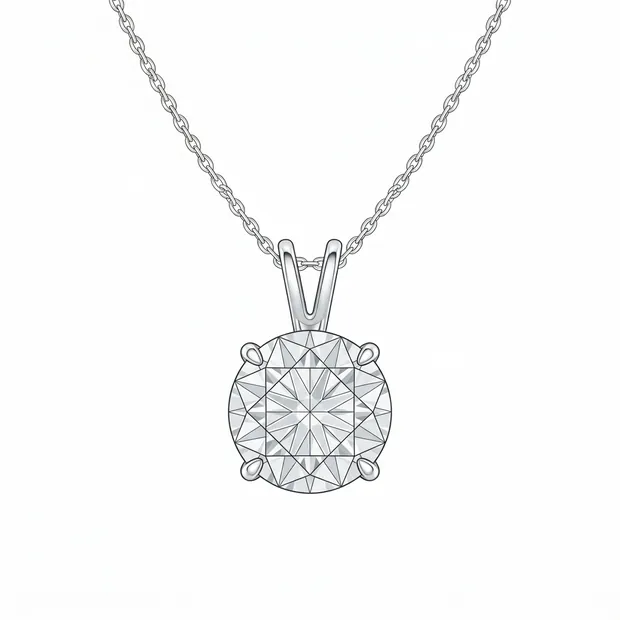
Necklaces
The chain matters more than buyers expect. Check the gauge and the clasp — a heavy pendant on a thin chain is a repair waiting to happen.
Links open each retailer's own category page. Rare Carat links are affiliate links and earn us a commission if you buy, at no extra cost to you. The others are plain links that earn us nothing today. If that changes, this line changes with it. Every relationship is listed on the disclosure page.
The three-way confusion
Three different things get called protection, and they cover almost nothing in common.
A manufacturer's warranty covers the piece being made wrong — a setting that fails because of a defect. It costs nothing and, as our warranty comparison sets out, it excludes normal wear, a stone knocked loose, and everything to do with loss.
An extended service plan is a separate paid product sold at the counter. It typically covers maintenance and some damage. It is not insurance and does not cover loss or theft.
Insurance covers loss, theft and accidental damage. It is an annual cost, it usually requires a valuation, and it is the only one of the three that addresses what actually happens to rings.
Buyers frequently leave a jewellery counter believing the plan they were sold covers a lost ring. It does not.
What a homeowners policy does and does not do
Most standard homeowners and renters policies include jewellery, but with two restrictions that together make them inadequate for an engagement ring.
A sub-limit. Jewellery has its own capped amount, separate from your contents total, and it is typically a small fraction of what an engagement ring costs. Whatever your overall coverage, that cap is what applies.
Limited perils. Base policies cover named events — fire, theft with evidence of break-in, and so on. A ring that slips off in the sea, goes down a drain or simply vanishes is often not covered at all. Insurers call that mysterious disappearance, and it is the single most common way rings are actually lost.
Scheduling: the fix most people need
Scheduling means listing the ring individually on the policy at its own value, rather than leaving it inside the general jewellery limit.
Scheduled items typically get broader cover — including mysterious disappearance — and often no deductible. It is the standard solution for a piece worth more than the sub-limit, which describes nearly every engagement ring.
It normally requires documentation: a recent purchase receipt for a new ring, an independent appraisal for anything older or inherited. Insurers may specify how recent that appraisal must be, so check before assuming an old one qualifies.
Specialist policies
Insurers who write jewellery specifically compete on breadth of cover rather than price alone — worldwide cover, no deductible, replacement rather than cash settlement, and cover for damage as well as loss.
The trade-off is that replacement terms matter as much as the premium. Ask specifically: if the ring is lost, do you receive money, or does the insurer replace it, and who chooses the replacement jeweller? That answer varies and it determines what you actually get.
Questions worth asking before you buy any policy
- What is the jewellery sub-limit on my current policy, and does it apply per item or in total?
- Is mysterious disappearance covered, or only named perils?
- Is settlement in cash or replacement, and who selects the replacement?
- Is cover worldwide, or limited to home and country?
- What deductible applies, and does scheduling remove it?
- Does a claim on this policy affect my homeowners premium?
That last one catches people. A jewellery claim on a homeowners policy can affect the whole policy; a standalone jewellery policy generally does not.
Where to start
Check what your existing policy already covers before shopping for anything new — the sub-limit is usually printed in the declarations page, and scheduling on the policy you already have is often the cheapest adequate answer.
We look at three insurers people search for specifically: State Farm, whose personal articles policy is the route most homeowners take, and Lemonade, which handles jewellery differently from a traditional carrier.
Common questions
Does my homeowners insurance cover my engagement ring?
Partly, and usually far less than the ring is worth. Standard policies apply a sub-limit to jewellery — a capped amount that applies to theft in particular — which is typically a small fraction of an engagement ring's value. Covered perils are also limited: a ring that simply goes missing often is not covered at all under the base policy.
What does scheduling a ring mean?
Listing the piece individually on your policy with its own value, rather than leaving it inside the general jewellery limit. Scheduled items usually carry broader cover — including mysterious disappearance — and often no deductible. It normally requires an appraisal or receipt.
Is a warranty the same as insurance?
No, and this is the most common confusion in the subject. A warranty is the maker's guarantee that the piece was made correctly; it covers manufacturing defects. Insurance covers loss, theft and accidental damage — the things that actually happen to rings. Neither substitutes for the other.
How much does ring insurance cost?
Pricing is typically expressed as an annual percentage of the insured value, and it varies by where you live, how the piece is covered and which insurer writes it. Get quotes with your actual valuation rather than relying on a published average — the variation between insurers on identical pieces is wide.
Do I need an appraisal?
Usually, to schedule the item. A recent purchase receipt often serves for a new ring. For an inherited or older piece you will generally need an independent appraisal, and insurers may specify how recent it must be.